A Centralized Hub for Knowledge and Inspiration
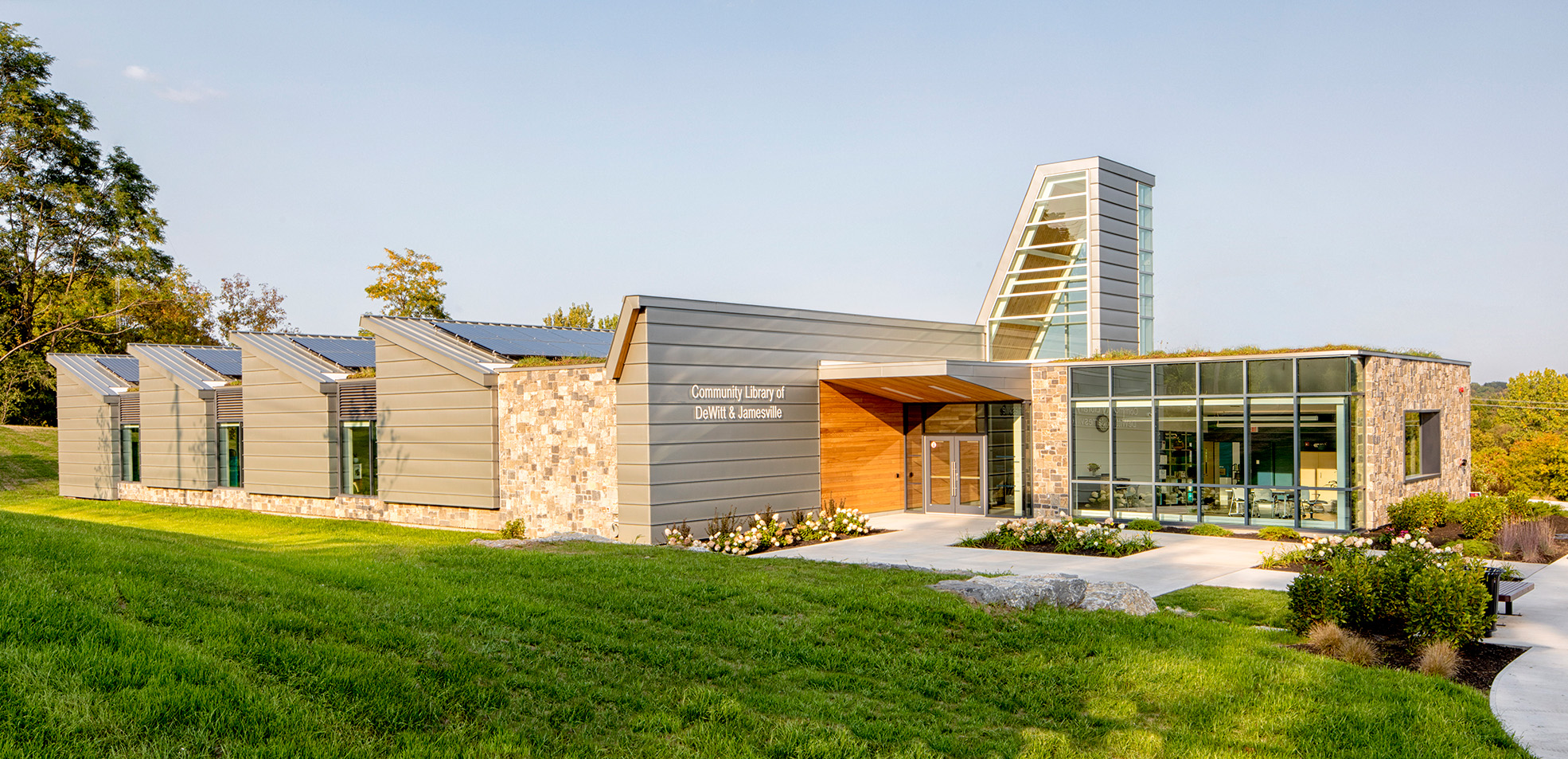
Following the industrial and agrarian heritage of Syracuse, the new Community library of Dewitt + Jamesville is a site sensitive and sustainable response to its surrounding context. Having outgrown the commercial space from which it had served Syracuse for over 50 years, the library began the process of evaluating other possible locations that would allow the ability to expand. This led to the selection of a more centrally located site along Jamesville Road to better serve the library’s 17,000 immediate residents.
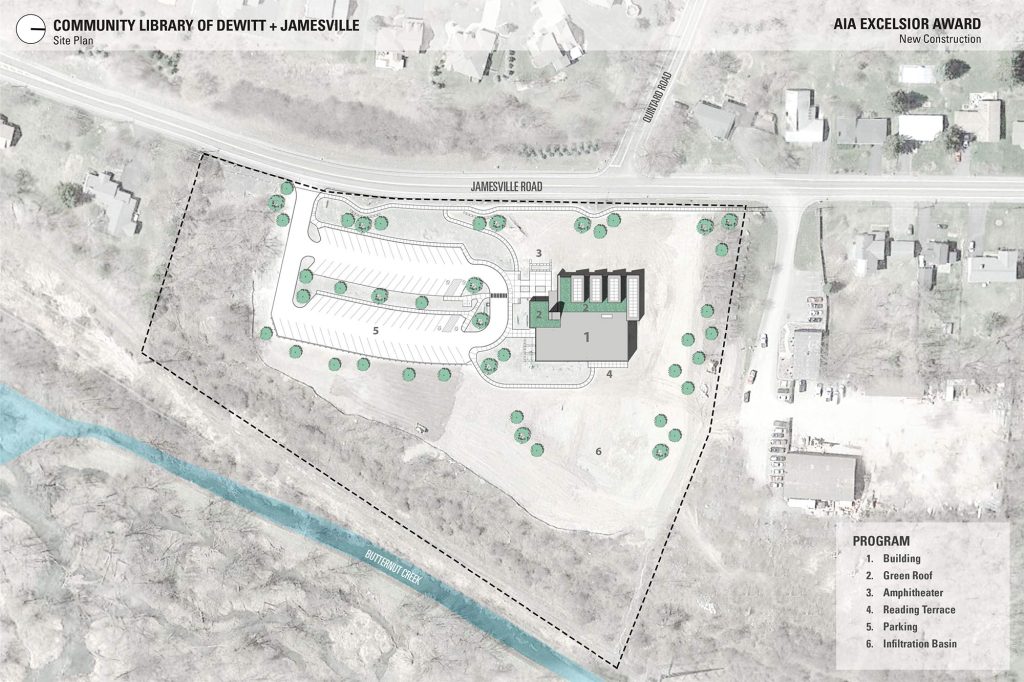
The dramatically sloping natural site, which was once used briefly as an active quarry, is positioned within a mix of residential homes and large industrial structures. The building design transforms the local industrial vernacular of the surrounding buildings and creates an inspirational public center for innovation, learning and social engagement.
Combining natural with industrial
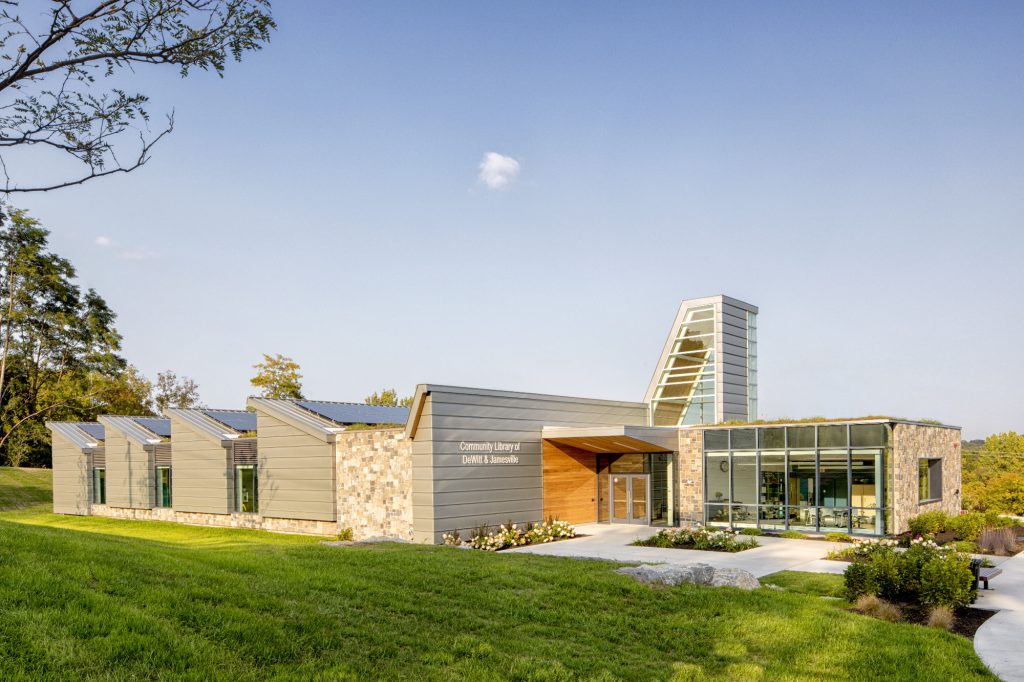
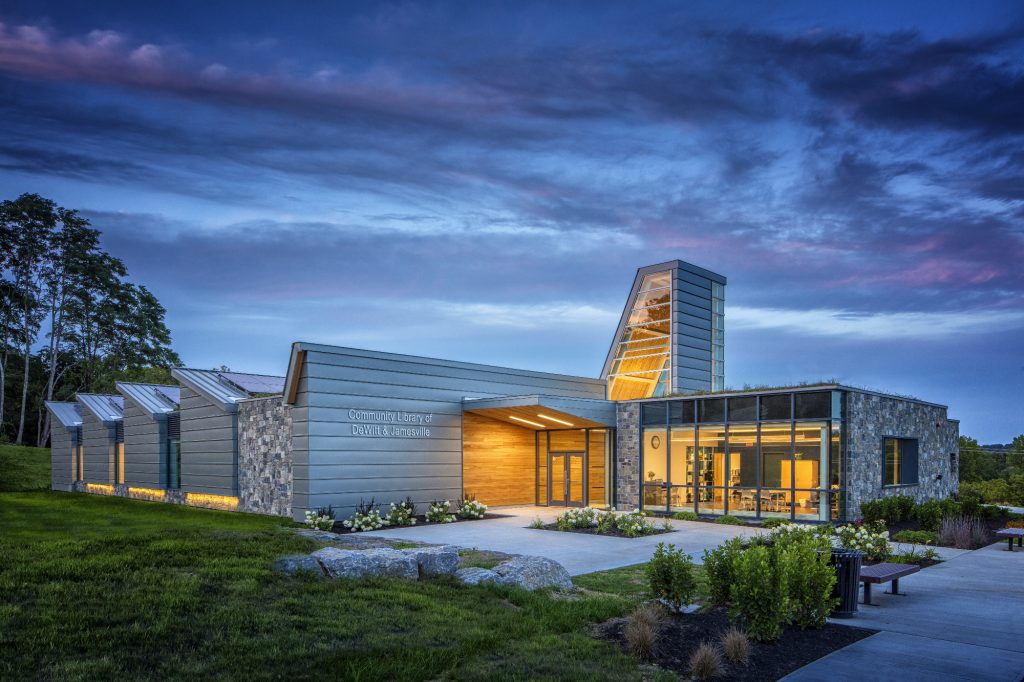
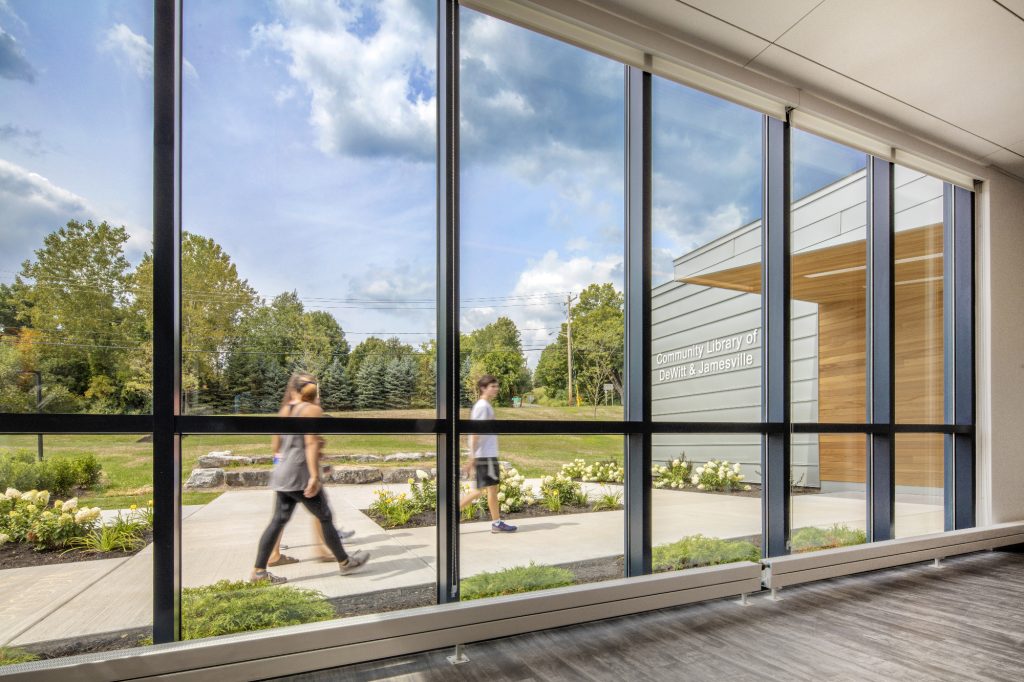
The design combines both the natural and industrial qualities of its place. This is reflected directly in the building façade, which is composed of three primary formal elements and materials; a cedar wood surface highlighting the main entry, a simple rectangular volume clad in locally quarried Alverson limestone; and a series of angular sheds clad in an aluminum metal panel.
The use of these materials allows the scale of the building to adjusts depending on the immediate context. Along the main entry and Jamesville road façade, the wood and angular saw tooth volumes bring down the presence of the building to the scale of the pedestrian and residential homes directly across the road, while the other two elevations are able to respond to the larger industrial scale of the area.
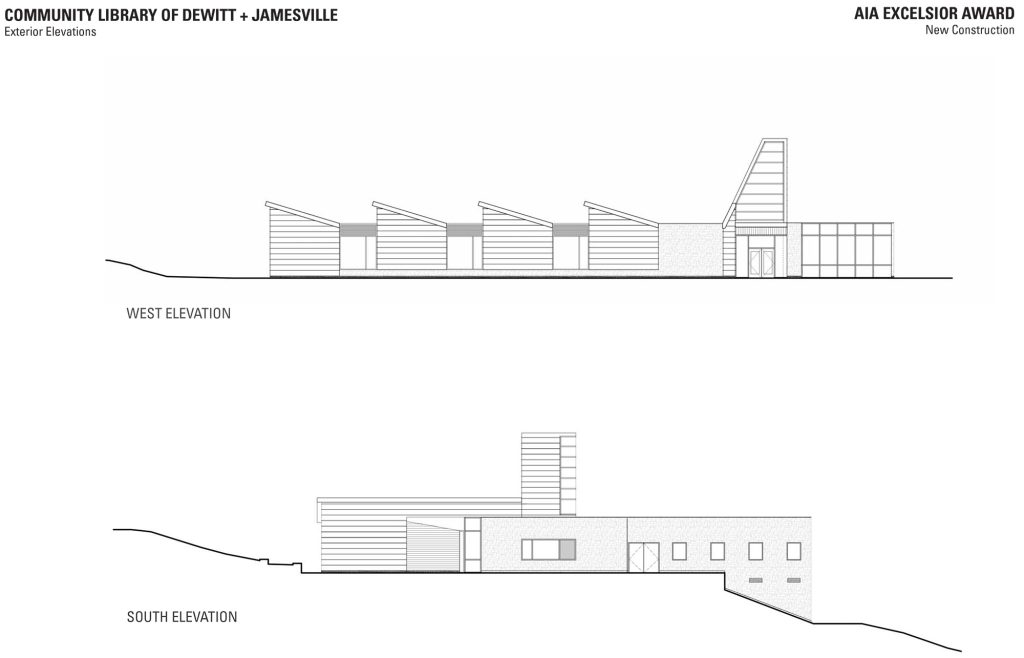
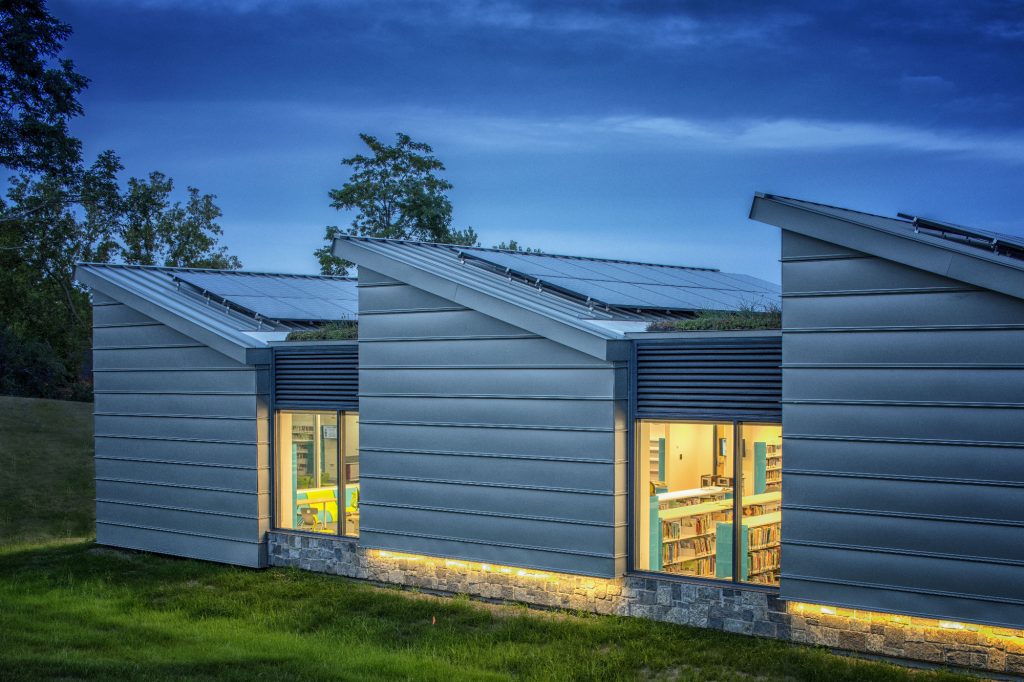
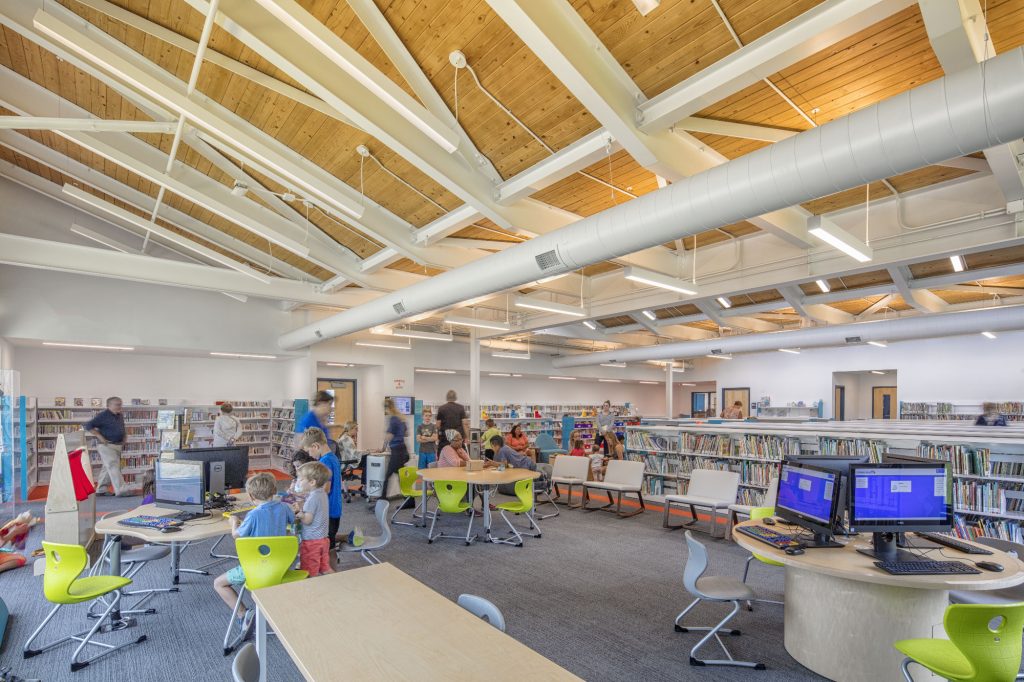
The suspended saw tooth volumes also provide modulated northern light for the Children’s Space as well as creating a roof surface that maximizes the efficiency of solar panels which aid in offsetting electricity cost.
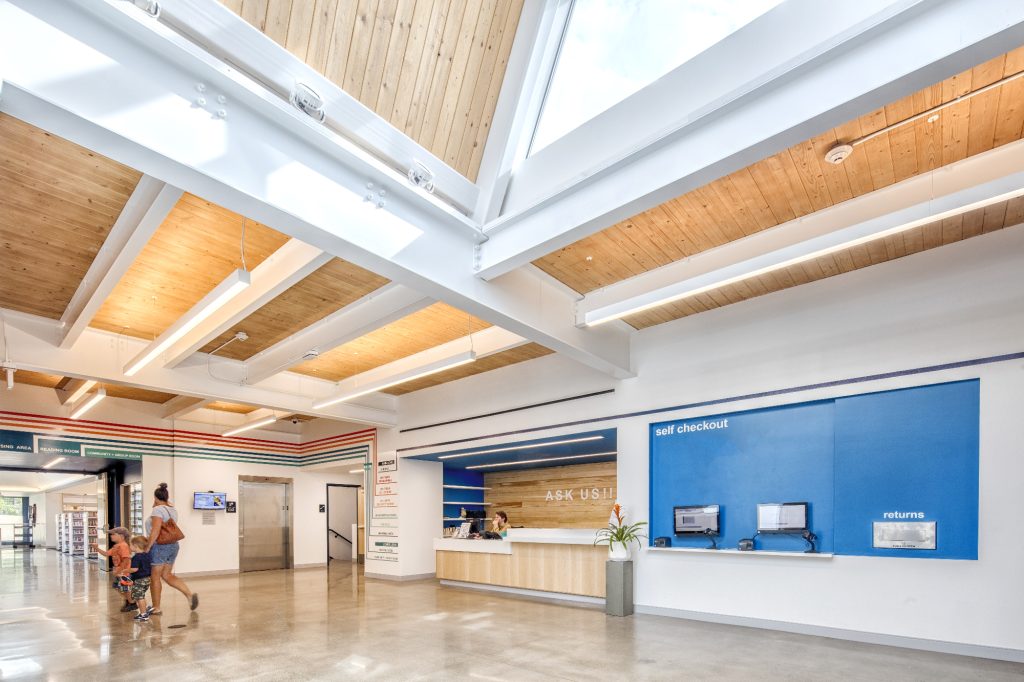
The vertical “headframe” tower covering the main lobby brings light deep into the interior and serves as a visible marker that can be seen from a distance. To help with mitigating storm water run-off, the design utilized a green roof system which is visible from the pedestrian sidewalk along Jamesville Road. Also incorporated into to the exterior design is a reading patio accessible from the main reading room and an amphitheater located in the entry plaza constructed from Alverson limestone.
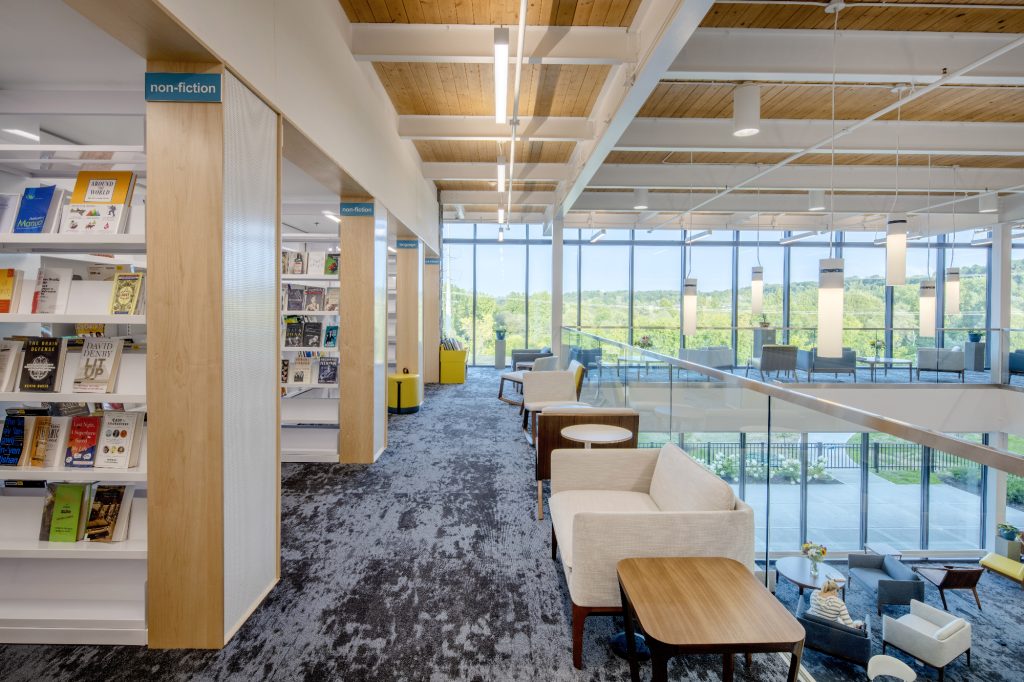
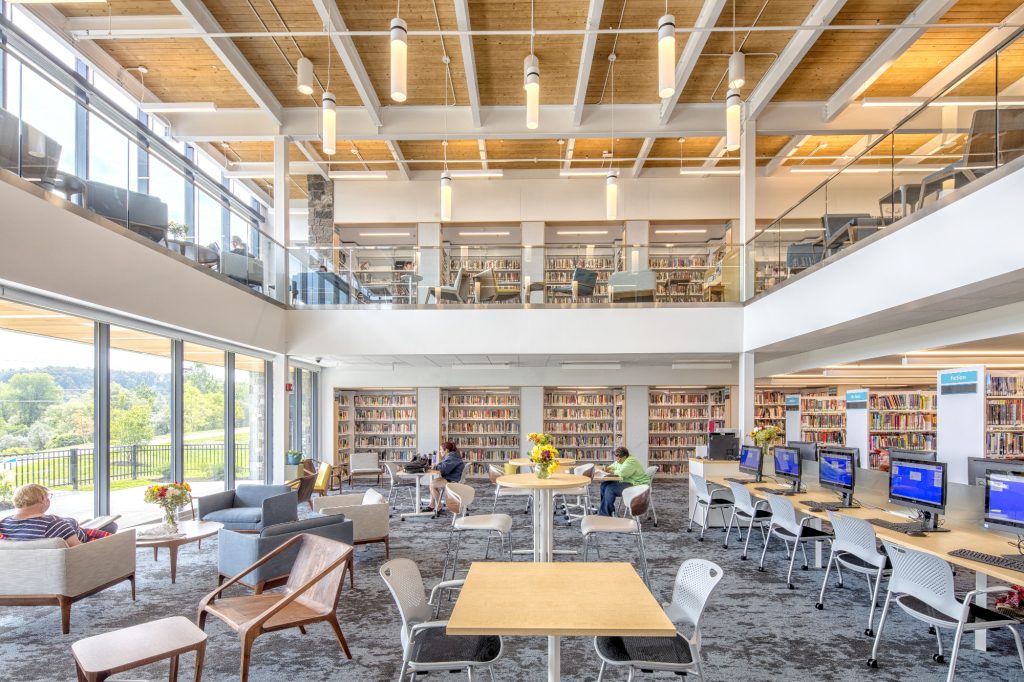
The interior of the building continues the industrial character of the exterior and features an exposed wood roof deck and steel beams. This treatment brings a warmth and human scale to the interior spaces.
Flexible spaces
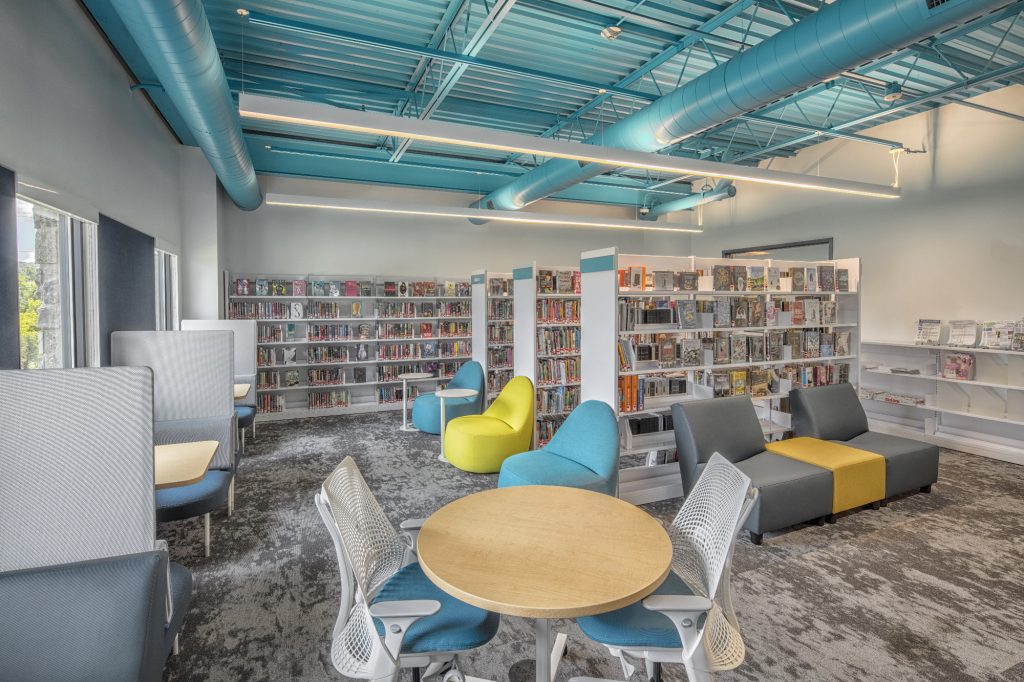
One of the initial goals of the new building was to create a design that was flexible and could adapt to the changing needs of the future. To accomplish this, the design reduces the area of the building dedicated to the storage of books and utilizes these spaces for social purposes.
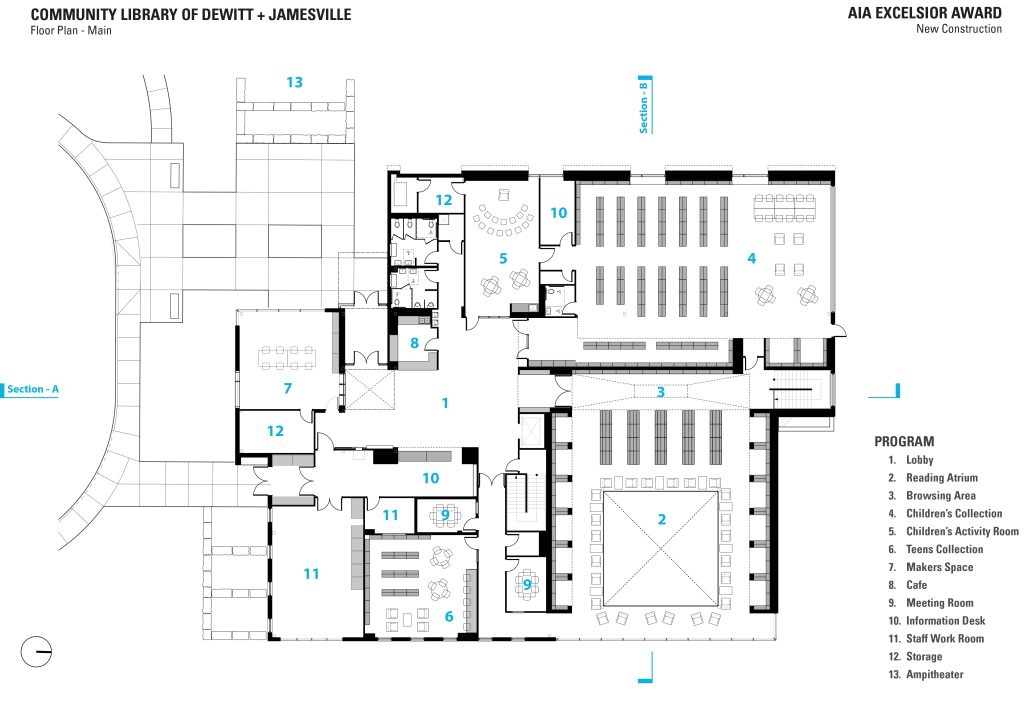
The building is programmed with a large two-story reading atrium, a dedicated space for the children’s collections and activity room, a collection and study space for teens, a Makers space, meeting rooms of various sizes for flexibility, a café and work spaces for staff.
These areas are organized into four major spatial volumes that pin-wheel outwards into the site from the central lobby. This organizational structure not only serves as a reference to the spiraling form of the past mining operation located on site, but also serves as a strategy to give each space natural daylight and the proper isolation for acoustical privacy.
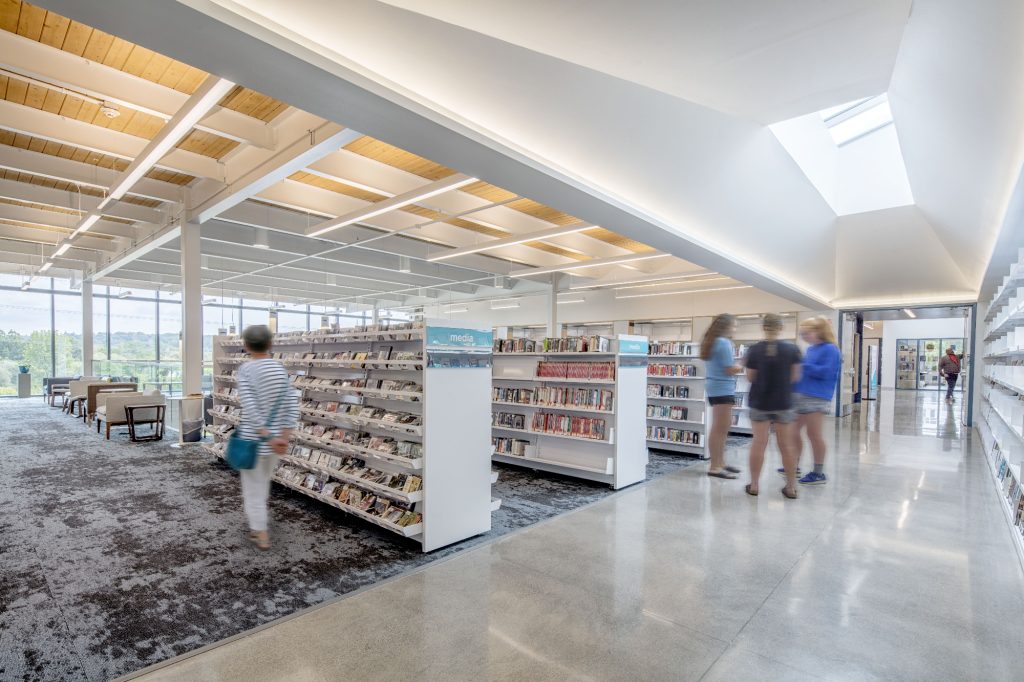
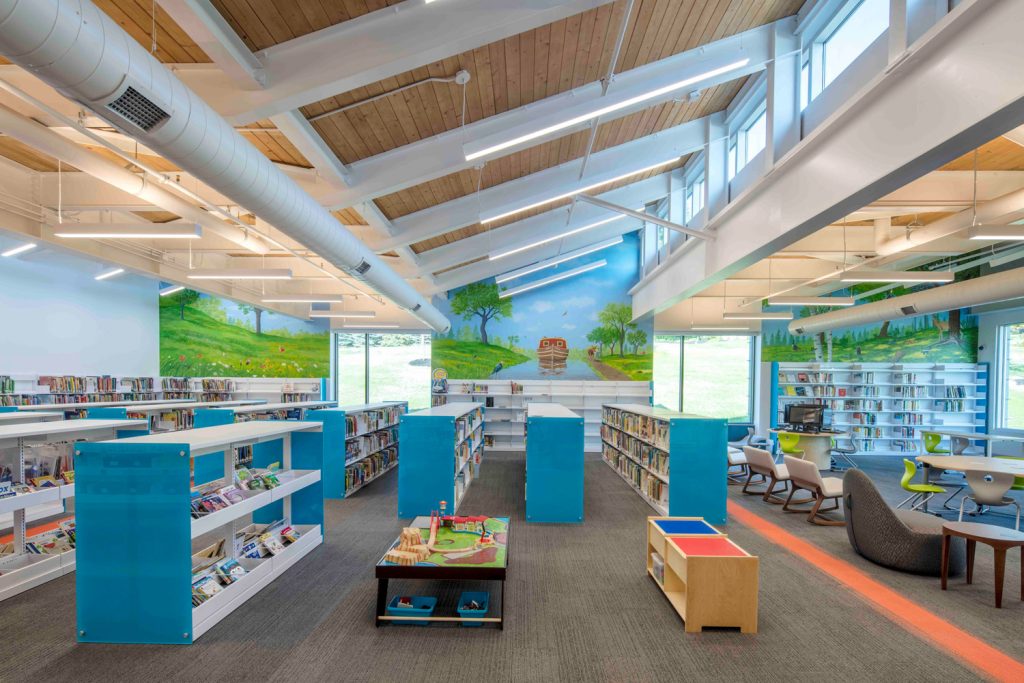
The reading atrium provides a unique community space for individuals or large groups to gather. In this space, the fixed elements, including the books shelves and HVAC equipment, line three of the perimeter walls allowing for the central floor area to be re-arranged depending on the intended need. The two-story floor opening further emphasizes the connection between levels and the expansive view of Butternut Creek while also allowing the appropriate sight lines for one staff member to supervise both floors from a single location.
The design of each collection area utilizes mobile shelving and lightweight furniture to allow for flexibility should collections or programs change in the future. The number of private meeting rooms available has been doubled from the previous library.
Community impact
With the additional space included in the new building, the library has been able to expand the number of programs and services offered, bringing in new members of the community.
Since opening in August, the library has had 1,000 new patrons register and has experienced a 20% increase in circulation with more significant increases for teens and children.
A significant amount of the funding for the project was from public sources. Of the 6.5-Million-dollar construction cost, 42% was publicly funded including 31% from the local tax levy and 11% from New York State grants. Due to the large increases in use over such a short period, there is no doubt that the new library has provided a positive impact on the community as a center for learning.