Flexible Spaces for Collaboration and Discovery
The design team was tasked with creating three transformative spaces within the middle school; a new main entrance, converting an existing standard classroom wing to a STEAM space, and bringing the old library into the 21st century. The three areas each presented unique programmatic requirements and constraints, so each were approached with different strategies: adaptation, reconfiguration, and reconstruction.
Adaptation
The challenge was to create a unique entry to provide the middle school an identity and clear differentiation from the rest of the building upon approach. Their school color, a bright shade of red, used to coat a perforated metal scrim hovering over the entry doors, with lighting that provides a welcoming glow on dim mornings. A new more secure entry is located beyond the front doors, providing a required update to the check in/out procedures with new security measures integrated as well.
Reconfiguration
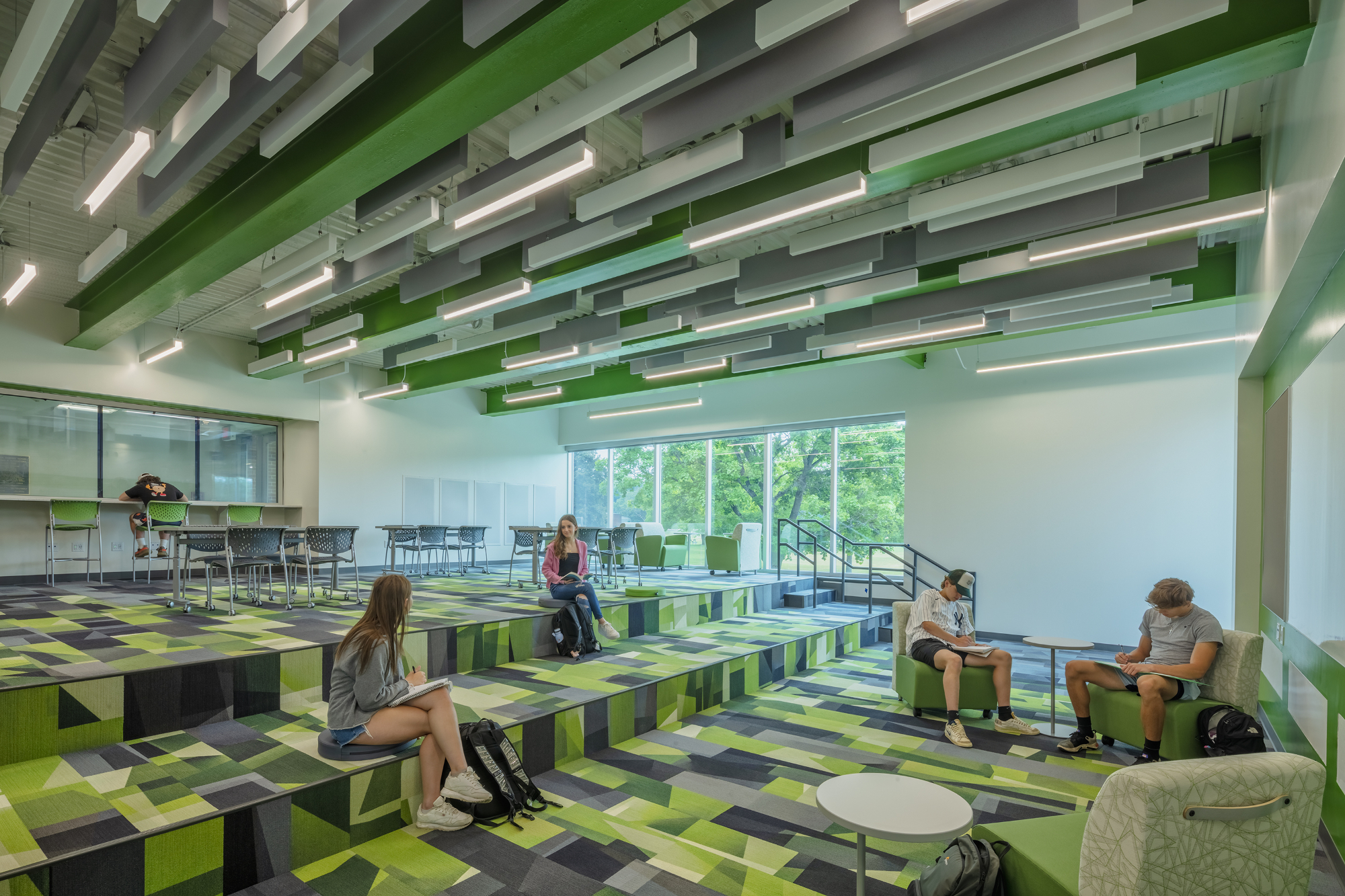
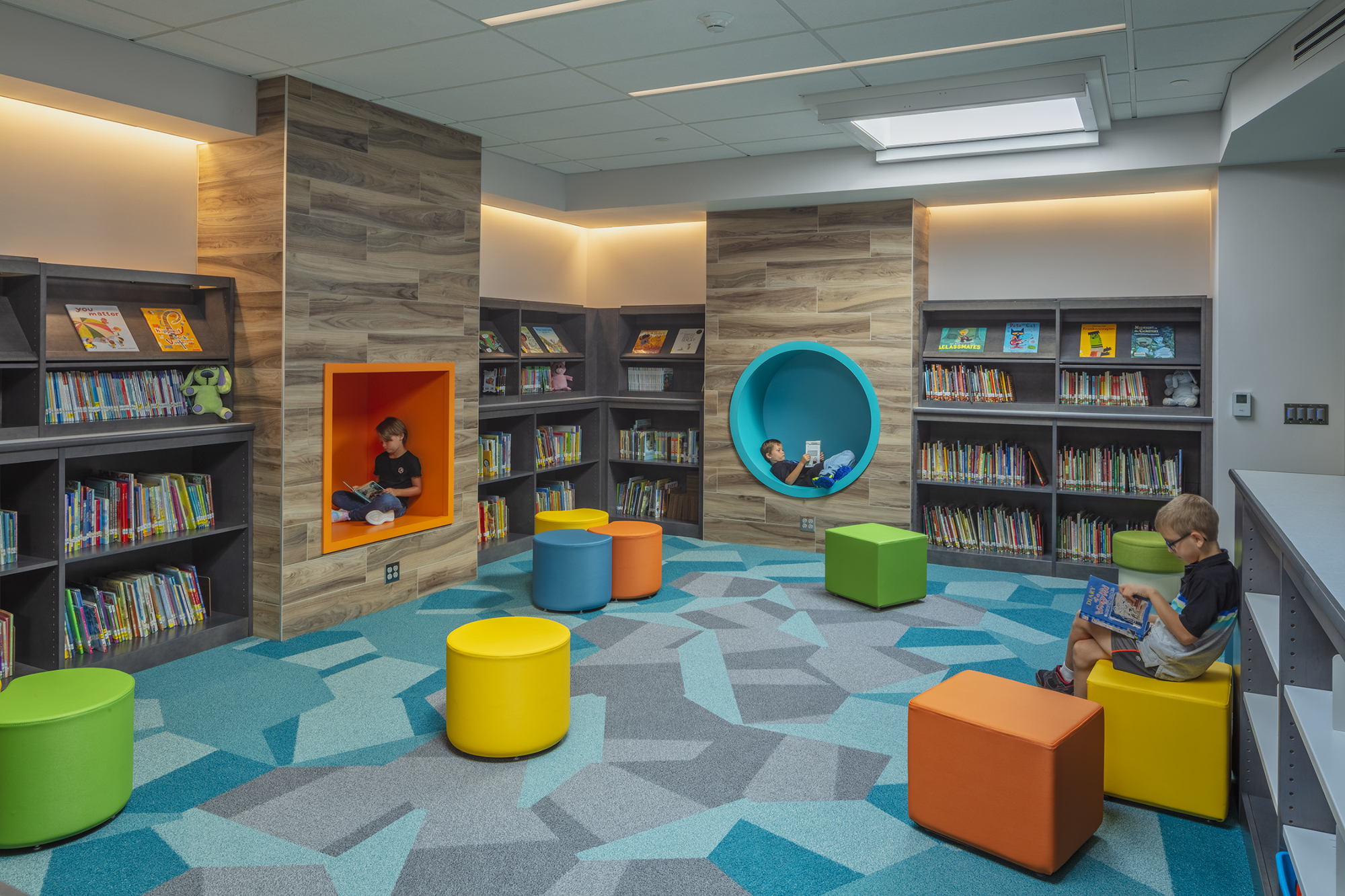
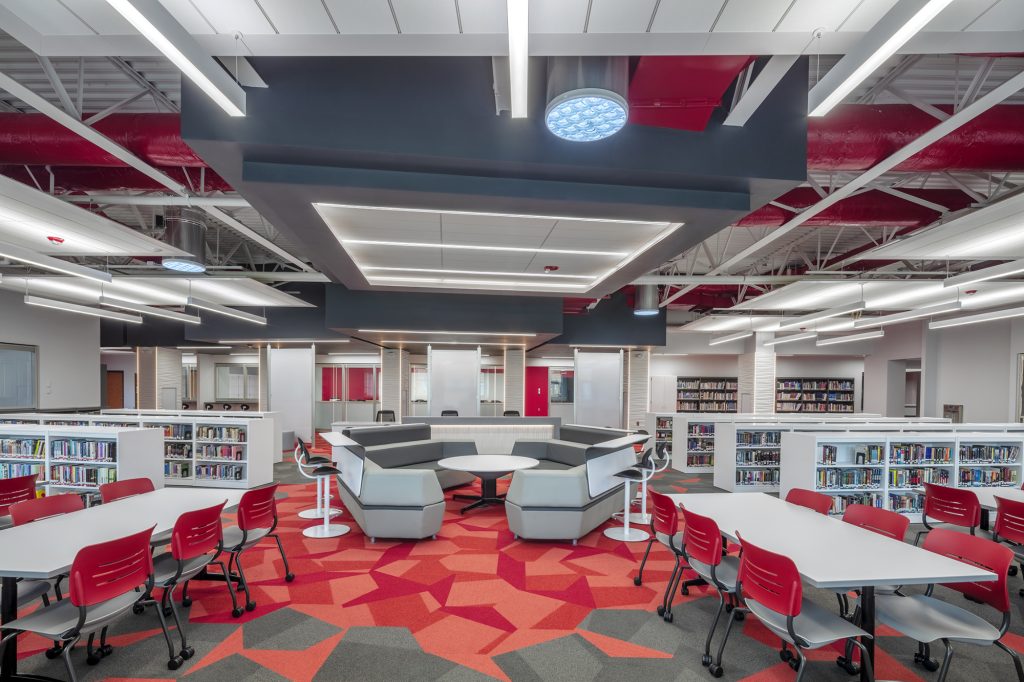
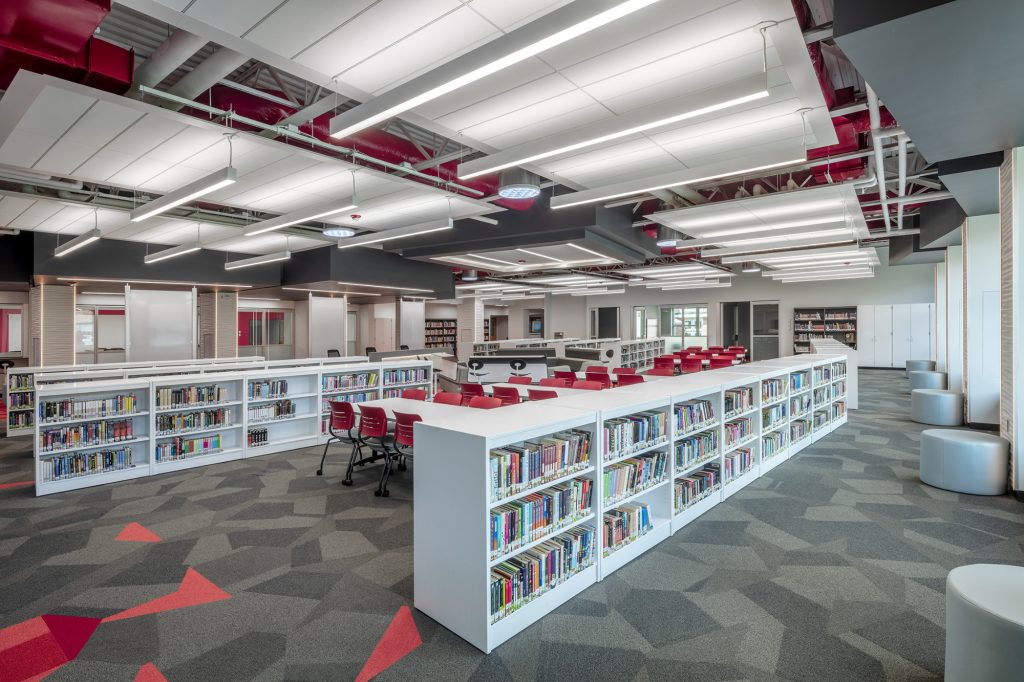
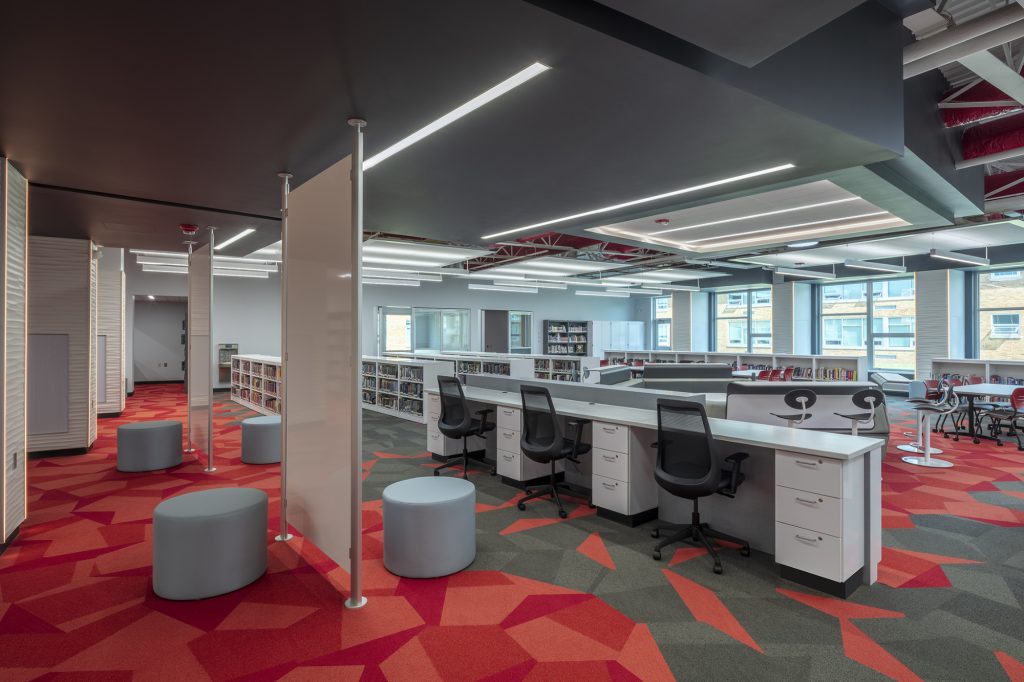
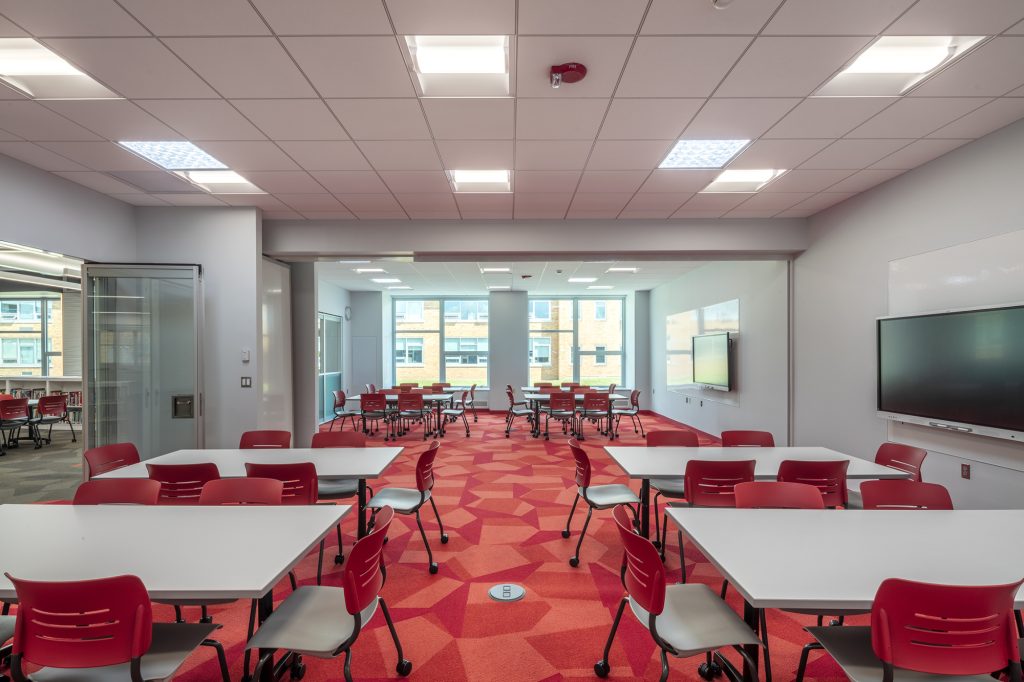
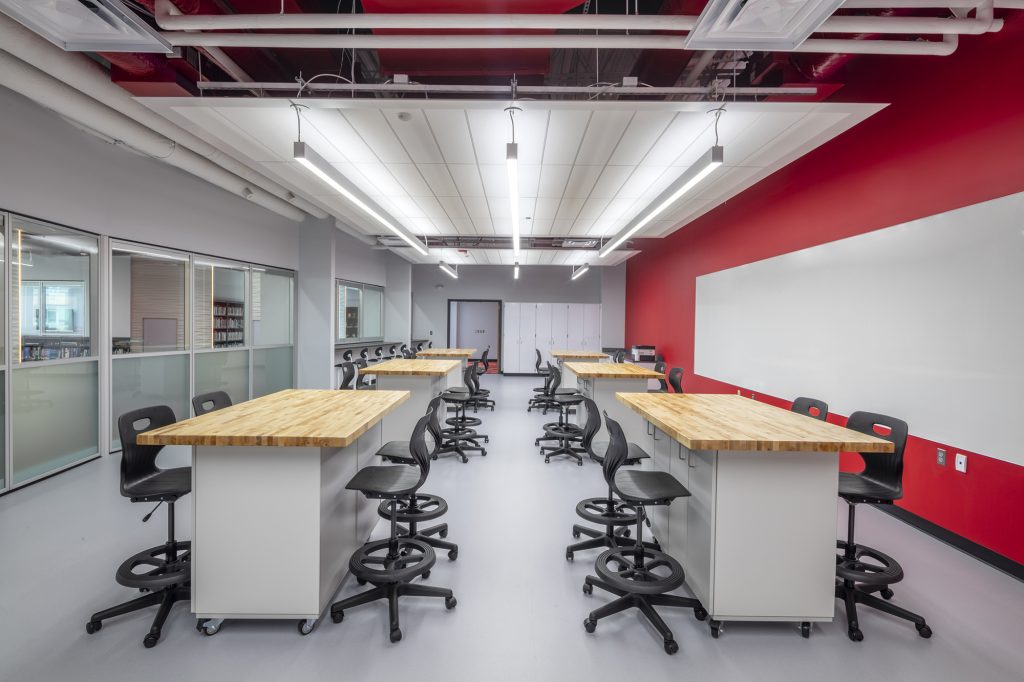
The existing library, rebranded as the Learning Commons, boasts flexible classroom spaces, furniture supporting large and small group gatherings, and small group conference rooms. The maker space is a state-of-the-art lab that supports the district’s technology activities in robotics and drone research and exploration. The large group instructional space has been transformed to a conference center with flexible space dividers and furniture that may be configured in a multitude of ways as needs arise. The new aesthetic is one that vitalizes students and promotes learning and collaboration.
Reconstruction
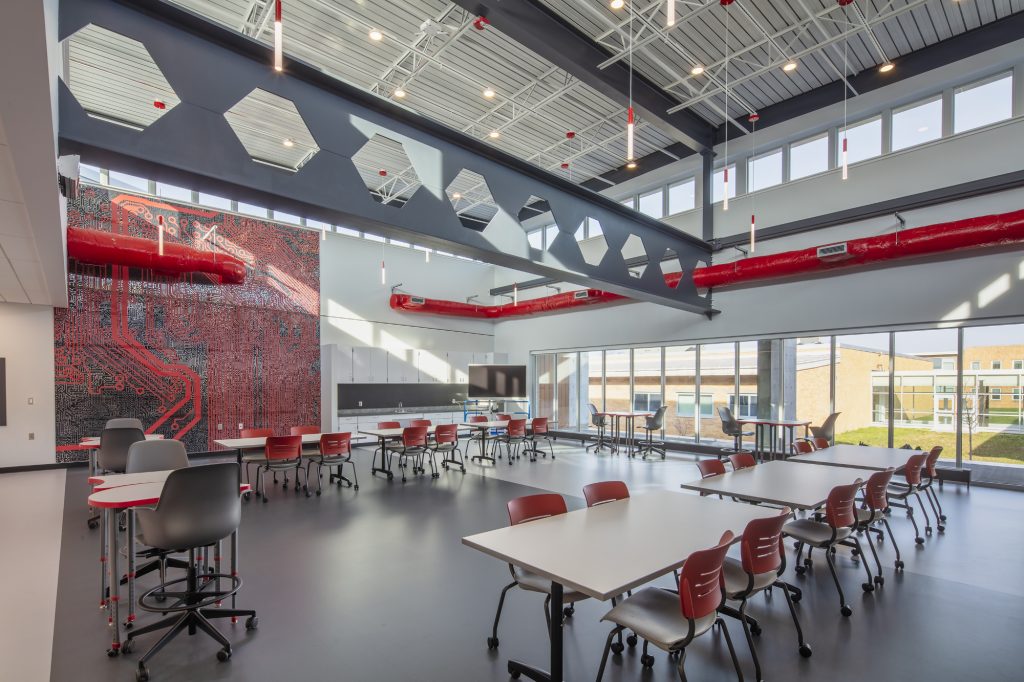
The new STEAM (Science, Technology, Engineering, Art, and Math) program required a complete rethinking of how a built environment should serve the space planning needs.
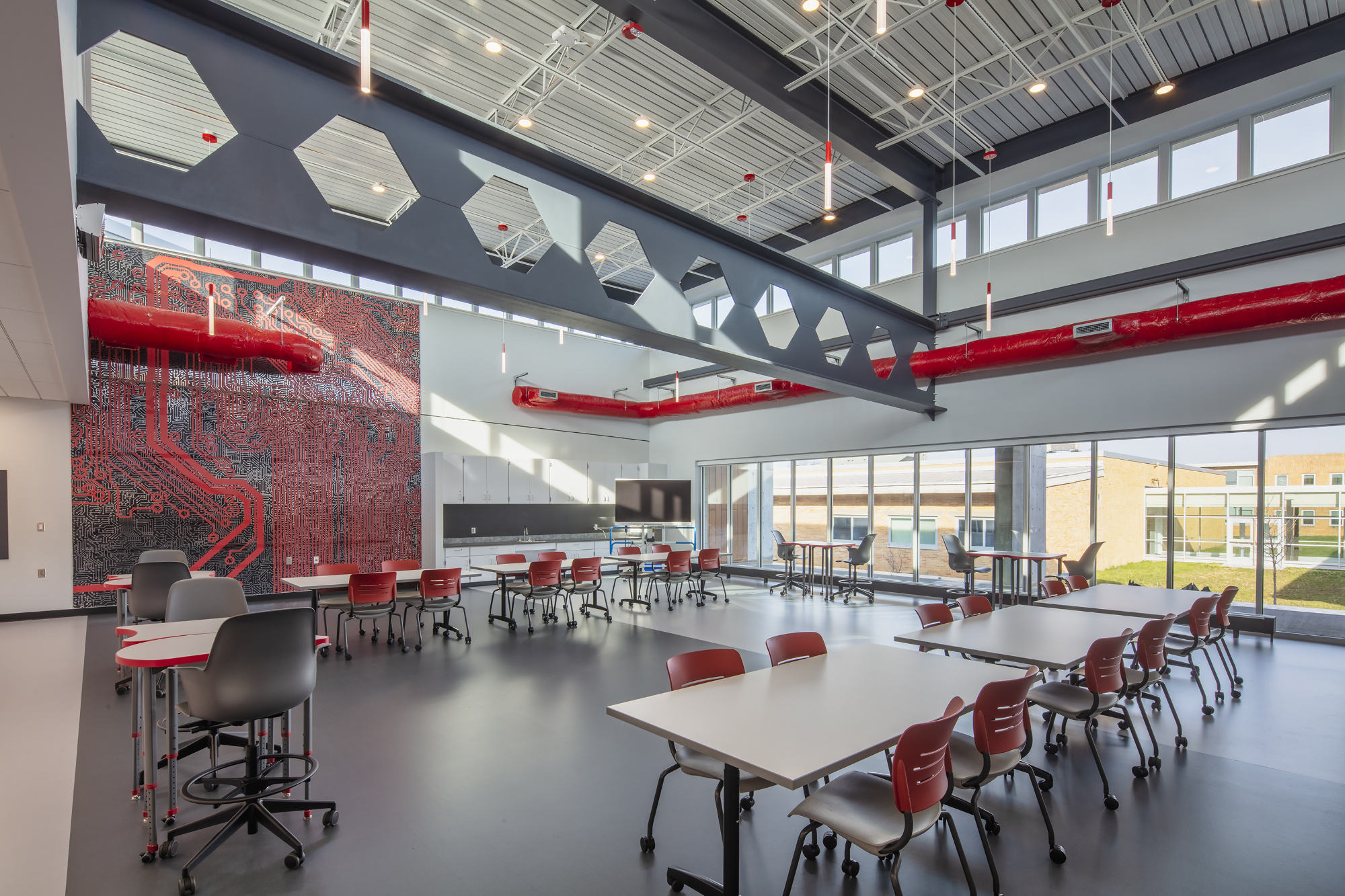
The existing building was entirely removed down to the slab creating a clean sheet for reconstruction. New structure with castellated beams clear span over interior spaces with no limiting structural components affecting the new layout, which integrates the typical corridor zone into the teaching spaces.
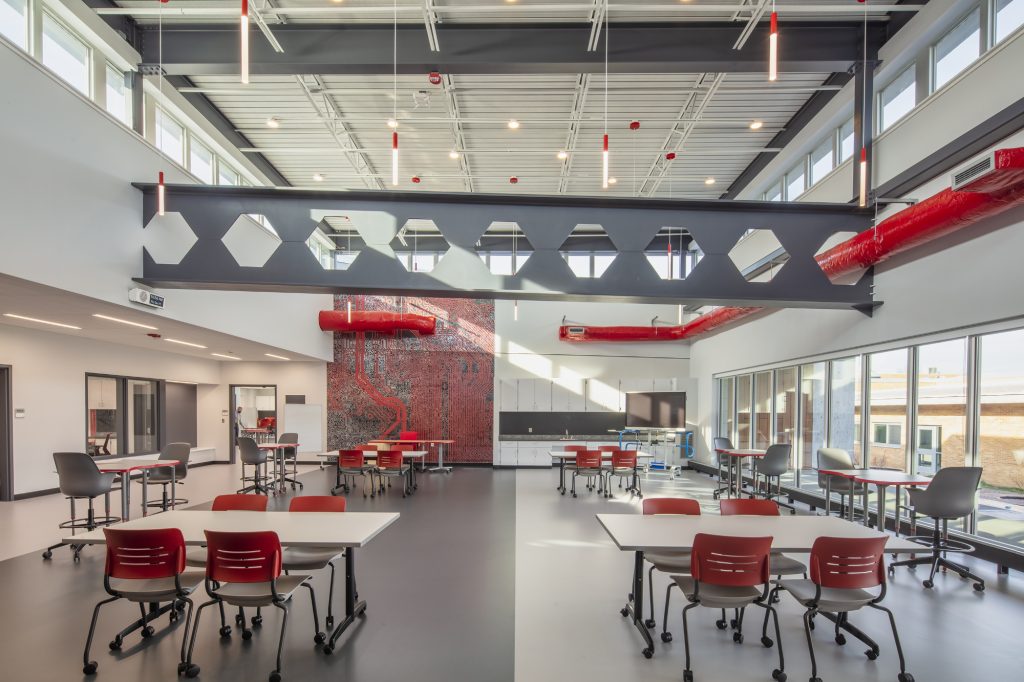
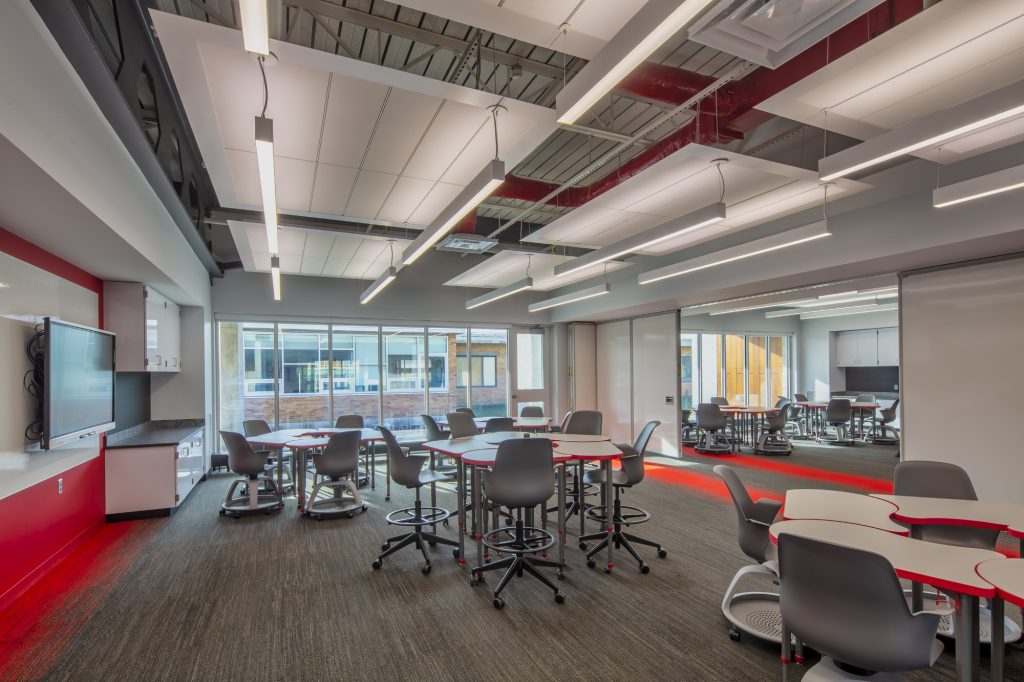
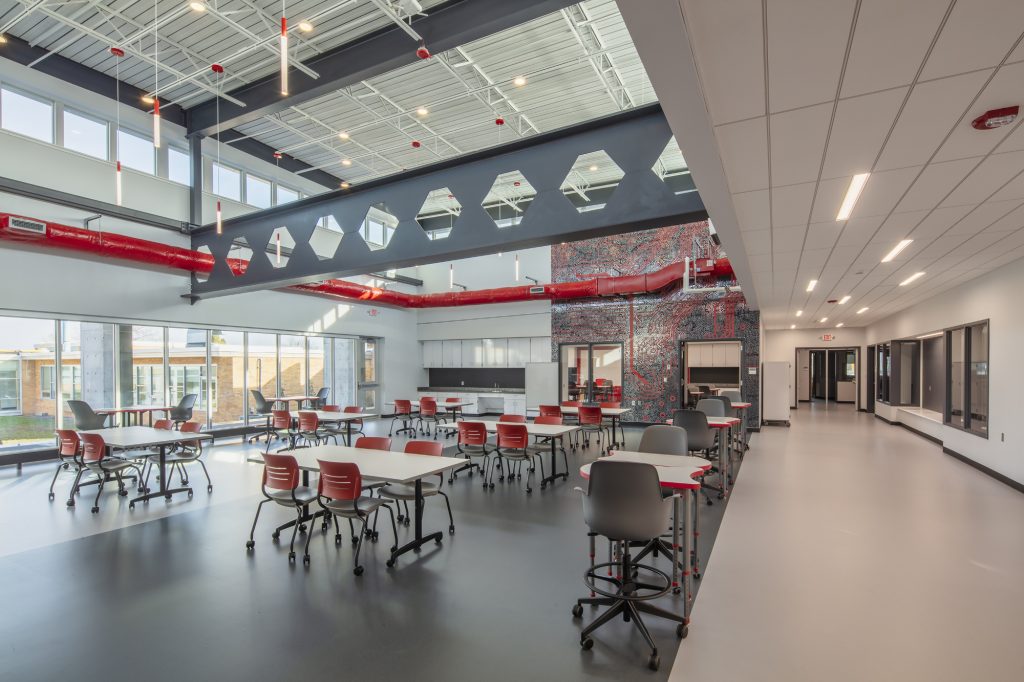
The school’s STEAM pedagogy partners core subject teachers with a group of students for the year as they teach and learn in an integrated cross-curricular environment, encouraging teaming and interpersonal skills. The new space supports the pedagogy by organizing classrooms around large communal areas, daylit from above by clerestory windows, creating comfortable and highly flexible spaces for group learning. Lastly, all teaching areas have direct access to the exterior, with covered outdoor spaces acting as a direct extension of classrooms, encouraging informal use of the building’s courtyards.